 |
поискавой системы для электроныых деталей |
|
|
поискавой системы для электроныых деталей |
|
The question interval is too short.
Please try again in a few seconds.

Hello, Please ask a question about D25SC6M Datasheet
# Example questions:
➢ What is the maximum average rectified forward current (io) the device can handle at a case temperature (tc) of 120°c?
➢ What is the approximate peak surge forward current (ifs) for a single non-repetitive cycle?
➢ What is the approximate maximum repetitive surge reverse power (prrsm) when the junction temperature (tj) is 150°c?
| Part No. | D25SC6M |
| Manufacturer | SHINDENGEN |
| Size | 543 Kbytes |
| Pages | 10 pages |
| Description | Schottky Rectifiers (SBD) (60V 25A) |

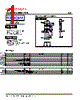
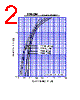

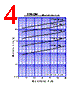
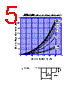
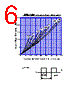


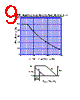


## Summary of the Provided Datasheet Information:
The provided text appears to be excerpts from a datasheet for a Schottky Barrier Diode (SBD). Here's a breakdown of the key information, categorized for clarity:
1. Electrical Characteristics (Implied):
️· The diode is designed for applications needing high current and fast switching speeds (typical of SBDs).
️· It's capable of handling significant average forward current (IO) and surge forward current (IFS).
️· It has a defined repetitive surge reverse power capability (PRRSM) and repetitive surge forward capability.
2. Thermal Characteristics:
️· The diode’s performance is highly dependent on its junction temperature (Tj).
️· Derating curves show how IO and PRRSM decrease as Tj increases.
️· Case temperature (Tc) is also important and affects performance.
3. Key Performance Graphs & Curves:
️· Forward Power Dissipation: Shows how much forward power the diode can handle at various currents and temperatures.
️· Average Forward Current (IO) vs. Case Temperature (Tc): Illustrates how the allowable forward current decreases as the case temperature rises.
️· Peak Surge Forward Current (IFS) vs. Number of Cycles: Depicts the diode’s ability to withstand short-duration, high-current surges.
️· Repetitive Surge Reverse Power (PRRSM) vs. Junction Temperature (Tj): Shows how the repetitive surge reverse power capability decreases with increasing junction temperature.
️· Repetitive Surge Reverse Power (PRRSM) vs. Pulse Width (tp): Demonstrates the relationship between repetitive surge reverse power and the duration of the pulse.
4. Key Parameters Highlighted:
️· IO: Average Forward Current
️· IFS: Peak Surge Forward Current
️· PRRSM: Repetitive Surge Reverse Power
️· Tc: Case Temperature
️· Tj: Junction Temperature
️· tp: Pulse Width
5. Overall:
The datasheet information indicates that this is a robust SBD intended for applications where high current handling, fast switching, and reliable surge current protection are critical. The graphs demonstrate how to properly use the device within its safe operating area (SOA) by considering thermal limitations and surge current capabilities.
## Summary of the Provided Datasheet Information:
The provided text appears to be excerpts from a datasheet for a Schottky Barrier Diode (SBD). Here's a breakdown of the key information, categorized for clarity:
1. Electrical Characteristics (Implied):
️· The diode is designed for applications needing high current and fast switching speeds (typical of SBDs).
️· It's capable of handling significant average forward current (IO) and surge forward current (IFS).
️· It has a defined repetitive surge reverse power capability (PRRSM) and repetitive surge forward capability.
2. Thermal Characteristics:
️· The diode’s performance is highly dependent on its junction temperature (Tj).
️· Derating curves show how IO and PRRSM decrease as Tj increases.
️· Case temperature (Tc) is also important and affects performance.
3. Key Performance Graphs & Curves:
️· Forward Power Dissipation: Shows how much forward power the diode can handle at various currents and temperatures.
️· Average Forward Current (IO) vs. Case Temperature (Tc): Illustrates how the allowable forward current decreases as the case temperature rises.
️· Peak Surge Forward Current (IFS) vs. Number of Cycles: Depicts the diode’s ability to withstand short-duration, high-current surges.
️· Repetitive Surge Reverse Power (PRRSM) vs. Junction Temperature (Tj): Shows how the repetitive surge reverse power capability decreases with increasing junction temperature.
️· Repetitive Surge Reverse Power (PRRSM) vs. Pulse Width (tp): Demonstrates the relationship between repetitive surge reverse power and the duration of the pulse.
4. Key Parameters Highlighted:
️· IO: Average Forward Current
️· IFS: Peak Surge Forward Current
️· PRRSM: Repetitive Surge Reverse Power
️· Tc: Case Temperature
️· Tj: Junction Temperature
️· tp: Pulse Width
5. Overall:
The datasheet information indicates that this is a robust SBD intended for applications where high current handling, fast switching, and reliable surge current protection are critical. The graphs demonstrate how to properly use the device within its safe operating area (SOA) by considering thermal limitations and surge current capabilities.
| Part No. | D25SC6M |
| Manufacturer | SHINDENGEN |
| Size | 543 Kbytes |
| Pages | 10 pages |
| Description | Schottky Rectifiers (SBD) (60V 25A) |
| Вашему бизинису помогли Аллдатащит? [ DONATE ] |
Что такое Аллдатащит | реклама | контакт | Конфиденциальность | Ссылка на техническое описание | обмен ссыками | поиск по производителю All Rights Reserved©Alldatasheet.com |
| Russian : Alldatasheetru.com | Korean : Alldatasheet.co.kr | Spanish : Alldatasheet.es | French : Alldatasheet.fr | Italian : Alldatasheetit.com Portuguese : Alldatasheetpt.com | Polish : Alldatasheet.pl | Vietnamese : Alldatasheet.vn Indian : Alldatasheet.in | Mexican : Alldatasheet.com.mx | British : Alldatasheet.co.uk | New Zealand : Alldatasheet.co.nz |
|
Family Site : ic2ic.com |
icmetro.com |
 Russian ▼
  English
 Chinese
 German
 Japanese
 Korean
 Spanish
 French
 Italian
 Portuguese
 Polish
 Vietnamese
 Indian
 Mexican
 British
 New Zealand